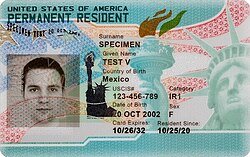
A green card, officially known as a Permanent Resident Card, is a document issued by the U.S. government that grants the holder permanent resident status. This status allows the individual to live and work in the U.S. indefinitely and provides a pathway to U.S. citizenship after a specified period (typically 3-5 years).
Is a green card the same thing as a visa?
No, a green card and a visa are different things. Green cards provide certain benefits that visas do not. Learn more in our Green Card vs Visa guide.
The green card application process differs depending on if you are applying from within or outside the United States. There are two main green card application forms:
Green card application (from within the US): Form I-485 (Application to Adjust Status). This form is used by those who are already in the U.S. on a nonimmigrant visa, have been selected for a diversity visa, or are eligible through family or employment.
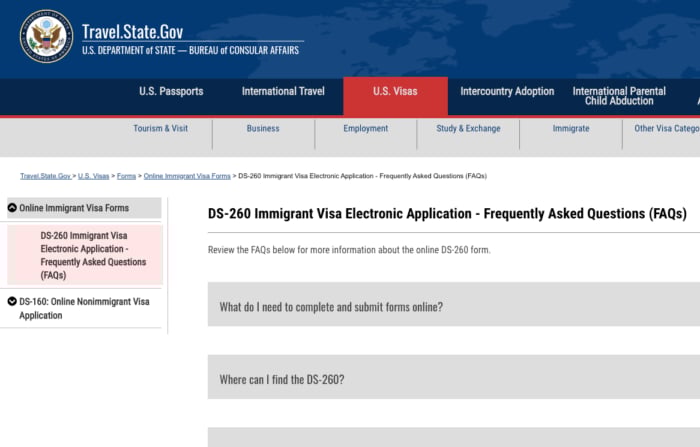
Green card application (outside the US): Form DS-260 (Immigrant Visa Electronic Application). This form is used by those seeking an immigrant visa from abroad, either through family, employer sponsorship, or the diversity visa program.
The processing time for a green card is anywhere from a few months to many years depending on the type of green card you’re applying for and where you’re applying from. More precise estimates are provided below. Learn how to check your green card application status.
Applying from within the United States
For spouses and immediate relatives (parents and minor children) of U.S. citizens applying from within the United States through adjustment of status, the wait is currently 7.4 months. For spouses of U.S. green card holders, other relatives of U.S. citizens, and employment-based green cards, the wait can be much longer, typically two years or more.
Applying from outside the United States
For spouses and immediate relatives (parents and minor children) of U.S. citizens applying from outside the United States via consular processing, the wait is currently 14.4 months. All other green card categories are subject to country caps, and wait times vary dramatically.
For spouses of U.S. green card holders applying from outside the United States, the current wait is 35 months.
.svg "FAQ")
What’s the difference between a Resident Card and a Green Card?
There is no difference — “Resident Card” and “Green Card” are two names for the same document. Officially called a Permanent Resident Card (Form I-551), this card proves that someone is a lawful permanent resident of the United States. The term “Green Card” is just a common nickname
The government filing fee for a family-based green card is $3,005 for an applicant applying from within the United States, and $1,340 for an applicant living outside the United States. Note, this does not include the cost of the medical exam, which varies by provider. Learn more about the costs of a family-based green card.
For other green card categories, check the USCIS website for the cost of your particular form.
Types of Green Cards
There are many categories of green cards. The most common types are:
- Family-Based Green Card
- Employment-Based Green Card
- Humanitarian Green Cards
- Diversity Lottery Green Card
- Longtime-Resident Green Card
- Other Green Cards
How to Get a Green Card
While the specific steps may vary based on your situation, most green card applications follow this general process:
- Petition Filing: Either someone files an immigrant petition for you, or in some cases, you file for yourself.
- Application Submission: Once your petition is approved and a visa is available in your category, you file a Green Card application with USCIS or a visa application with the U.S. Department of State.
- Biometrics Appointment: Provide your fingerprints, photos, and signature.
- Interview: Attend an interview with immigration officials.
- Decision: Receive a decision on your application.
This process can take several months to several years, depending on your specific circumstances and visa category. Below is a detailed explanation of each category, starting with family-based green cards:
Getting a family-based green card
Close relatives of U.S. citizens and current green card holders may apply for family-based green cards of their own. Eligible family members include spouses, children, parents, and siblings (as well as the spouses and children of those spouses, adult children, and siblings).
The following table lists the employment-based subcategories and the types of jobs that fall under them.
See the different types of Work Visas
*Extraordinary ability is demonstrated “through sustained national or international acclaim. Your achievements must be recognized in your field through extensive documentation,” according to U.S. Citizenship and Immigration Services (USCIS).
**Exceptional ability refers to “a degree of expertise significantly above that ordinarily encountered” in your field.
Also included in this category are widows and widowers who were married to a U.S. citizen at the time the citizen died. Like spouses of living U.S. citizens and current green card holders who apply for a marriage-based green card, widows and widowers must prove that their marriage was authentic in order to receive a green card.
Many extended family members — cousins, aunts and uncles, and grandparents — do not qualify. They may apply for a U.S. permanent resident card only if they, too, have a closer relative who is a U.S. citizen or current green card holder (or qualify for one of the other types of green cards below).
Boundless can help you avoid common pitfalls in the immigration process with unlimited support from our team of immigration experts.
Getting an employment-based green card
Within the employment-based green card category, multiple subcategories of workers can apply for a permanent resident card. In some cases, their spouses and children may qualify for a green card, as well.
Types of employment-based green cards
The following table lists the employment-based subcategories and the types of jobs that fall under them.
*Extraordinary ability is demonstrated “through sustained national or international acclaim. Your achievements must be recognized in your field through extensive documentation,” according to U.S. Citizenship and Immigration Services (USCIS).
**Exceptional ability refers to “a degree of expertise significantly above that ordinarily encountered” in your field.
Getting a humanitarian green card
For Military Family Members: Parole in Place (PIP)
Parole in Place (PIP) offers a pathway to lawful status for military families. This program is available to undocumented spouses, parents, and children of U.S. military service members (active duty, veterans, or Selected Reserve of the Ready Reserve).
Under the program, eligible individuals can request parole without leaving the U.S., allowing them to adjust status to permanent resident if they qualify. While PIP itself doesn’t grant a green card, it removes certain barriers to adjustment of status, making the path to permanent residency more accessible for these family members.
For refugees and asylees
People who fear, or have experienced, persecution in their home country — because of their race, religion, nationality, political opinion, or membership in a particular social group — can seek protection in the United States by applying for a visa from abroad (to come as refugees) or from within the United States (to remain as asylees).
Once they have physically lived in the United States for at least one year since receiving refugee status or asylum, they may apply for a U.S. permanent resident card. Children and spouses (and in some cases, other family members) of refugees and asylees may also seek protection in the United States under these programs and eventually apply for a green card.
For human-trafficking victims
Victims of human trafficking who are living in the United States — whether lawfully or unlawfully (in other words, “undocumented”) — may apply for a T visa to stay in the United States for up to four years. As a condition of the T visa, however, they must help to investigate and prosecute perpetrators of human trafficking (unless the victim is under age 18, in which case they need not help with such efforts).
To qualify for a permanent resident card, the applicant must have physically lived in the United States for one of the following periods, whichever is shorter:
- Three years since receiving a T visa
- The duration of an investigation or prosecution of human trafficking
They must also meet other eligibility requirements. These include, for instance, demonstrating “good moral character” (meaning they have not committed certain crimes, such as fraud, prostitution, or murder) from the time they received a T visa until they’re approved for a green card. As another example, they must demonstrate to the U.S. government that they would suffer extreme hardship involving severe harm if they were required to leave the United States. (USCIS provides the full list of eligibility criteria.)
Certain family members will also be eligible to apply for their own green cards as long as both those relatives and the victim satisfy all requirements.
For crime victims
Victims of “substantial physical or mental abuse” who are living in the United States — whether lawfully or unlawfully (in other words, “undocumented”) — may seek protection by applying for a U visa. To obtain a U visa, the victim’s application must be certified by a law enforcement agency. Like recipients of T visas (see above), an applicant for a U visa must also agree to help investigate and prosecute people who commit certain crimes, such as kidnapping, sexual assault, and torture.
To qualify for a green card, however, the applicant will need to fulfill other eligibility requirements, including the following examples:
- They must have physically lived in the United States for at least three years since receiving a U visa.
- They must not have left the United States from the time they applied for a green card until USCIS has approved (or denied) their application.
- They must not have refused to help investigate or prosecute certain crimes from the time they received a U visa until USCIS approves (or denies) their green card application.
The victim’s children, parents, siblings, and spouse will also be eligible to apply for their own green cards as long as both those relatives and the victim satisfy all requirements.
For abuse victims
Victims of domestic violence (battery or extreme cruelty) may apply for a green card that would allow them to seek relief through the Violence Against Women Act (VAWA). Although this law was created to benefit women, it applies to both women and men, and both parents and children, who are victims of abuse.
An abuse victim may apply for a permanent resident card on their own — without the knowledge or permission of their abusive relative, who can include:
- A current or former spouse who is a U.S. citizen or green card holder
- A parent who is a U.S. citizen or green card holder
- A child who is a U.S. citizen
USCIS will not notify the abusive relative of the application in order to keep the victim safe. (Full eligibility requirements are detailed on the USCIS website.)
.svg "FAQ")
Important:
If you or someone you know is experiencing domestic abuse now, contact the National Domestic Violence Hotline right away at 1-800-799-7233 or 1-800-787-3224 (TTY). You’ll be able to talk with someone about available resources, such as shelters, mental health care, and legal assistance. The hotline also provides information about green cards through VAWA.
Diversity Lottery green card
Under the U.S. “green card lottery” (officially known as the “Diversity Visa Lottery Program”), the U.S. government every year randomly selects up to 50,000 people from a pool of entries it receives from six geographic regions, such as Africa, Asia, and Oceania. Only people from countries that have had little immigration to the United States in the past — for example, Algeria, Lebanon, and Slovakia — may enter the lottery. The share of green cards distributed to any one country is capped at 7%.
Most lottery applicants live in their home countries at the time they cast their entries, but some already live in the United States under a different type of immigration status.
Important:
December 18, 2025: The Trump administration has suspended the green card lottery until further notice.
Getting a longtime-resident green card
Individuals who have physically lived in the United States — lawfully or unlawfully (meaning you were “undocumented”) — since January 1, 1972 may apply for a permanent resident card through a special process called “registry.”
To qualify for a green card through registry, the individual must meet all of the following criteria:
- They entered the United States before January 1, 1972, which they would need to prove by providing an I-94 travel record (officially called the “Form I-94 Arrival/Departure Record”).
- They have not left the United States since arriving.
- They have “good moral character,” meaning they have not committed certain types of crimes, such as fraud, prostitution, or murder (see more info on “Good Moral Character“).
- They’re eligible for U.S. citizenship through naturalization.
- They have not committed crimes that would make them “deportable” (able to be sent back to their home country). Examples of such violations include drug abuse, smuggling, and marriage fraud (marrying a U.S. citizenc or green card holder to obtain a marriage-based green card).
- They have not committed crimes that would make them “inadmissible” (meaning they cannot receive a green card). Examples of such violations include entering the United States unlawfully and staying more than six months in the United States with an expired visa.
Other types of green cards
The U.S. government issues many other types of green cards besides the ones discussed above. Some of these include permanent resident cards for “special immigrants,” including media professionals, religious workers, Afghanistan and Iraq nationals who have served the U.S. government under certain capacities, and other types of workers who have served in an international organization. Others include green cards for Cuban citizens and American Indians born in Canada.
USCIS provides a list of these other green card types and their eligibility requirements.
idocs helps you build a tailored visa plan for every step of the green card process, from forms to your immigration interview. Get started today!
Applying for immigration benefits like a marriage green card, K-1 fiancé visa, or U.S. citizenship involves specific USCIS forms with associated fees. In 2026 the K-1 fiancé visa process takes approximately 7.7 months for applications filed today. The spousal visa (CR-1 visa) process can take between 14.5 and 35 months depending on the sponsor’s U.S. citizenship status. Understanding the overall cost and timeline of each option is crucial for couples deciding on the best path to a green card.
New Visa-Related Fees in 2025
The One Big Beautiful Bill Act (OBBBA) introduces several new fees starting in fiscal year 2025, including a $250 “visa integrity fee” for most nonimmigrant visa applicants. Other increases affect Form I-94, ESTA, TPS, parole, and asylum filings.
These fees are in addition to existing USCIS application costs and, in many cases, cannot be waived.
- Purpose: Obtaining lawful permanent residence in the U.S. based on marriage to a U.S. citizen or permanent resident.
- Who Must File: The spouse seeking the green card.
- Associated Fees: Up to $3005
- Forms Required:
- Form I-130 (Family Sponsorship Petition)
- Form I-485 (Green Card Application)
- Purpose: Bringing a fiancé(e) to the U.S. for marriage within 90 days of arrival.
- Who Must File: The U.S. citizen fiancé(e).
- Associated Fees: $675
- Forms Required:
- Form I-129F (Petition for Alien Fiancé(e))
- Purpose: Bringing a spouse to the U.S. as a lawful permanent resident.
- Who Must File: The U.S. citizen or permanent resident spouse.
- Associated Fees: $1540
- Forms Required:
- Form I-130 (Family Sponsorship Petition)
- Form DS-260 (Online Immigrant Visa Application)
U.S. Citizenship (Form N-400):
- Purpose: Obtaining citizenship through naturalization.
- Who Must File: Eligible permanent residents meeting residency and other requirements.
- Associated Fees: $760
- Forms Required:
- Form N-400 (Application for Naturalization)
When should I file to avoid a fee increase?
You should file your USCIS application before any new fee rule takes effect, as fee increases are not applied retroactively. The most recent fee hike went into effect on April 1, 2024. While no new increase has been announced yet, it’s smart to file as soon as you’re eligible — especially if USCIS has proposed new changes or updates. Check the Federal Register for advance notice of any upcoming fee adjustments.
Below is a comprehensive overview detailing the current prices of key forms.
Green Card Cost
Green card costs in 2025 can be substantial, typically ranging from $2,000 to $3,000 for family-based applications and $2,000 to $5,000 or more for employment-based applications, especially if premium processing is used. These figures can increase further when accounting for additional expenses beyond USCIS fees. Learn more below.
Key Points
- New USCIS fees took effect April 1, 2024
- Costs vary depending on your specific situation and application type
- Additional expenses beyond USCIS fees should be considered
Green Card Fee Changes: Key Updates and Cost Implications
USCIS introduced a new fee rule effective April 1, 2024, bringing substantial changes to green card application costs and processes:
- Overall Fee Increases: Most immigration and naturalization benefit requests, including green card applications, now have higher fees.
- New I-485 Fee Structure: The Application to Register Permanent Residence or Adjust Status (Form I-485) has a revised fee system, directly impacting green card costs.
- Online Filing Discount: Many forms, including some for green card applications, offer a $50 reduction for online submission, encouraging digital applications and potentially lowering costs.
- Employment Authorization Fee Changes: Separate fees for initial and renewal employment authorization applications have been introduced, affecting costs for green card applicants who also need work permits.
- Biometrics Fee Integration: The biometrics fee is now incorporated into the main application fee, eliminating it as a separate charge and simplifying the overall cost structure for green card applications.
- Advance Parole Fee: A separate fee for advance parole (travel document) applications has been established, potentially adding to the total cost for green card applicants who need to travel.
- Expanded Fee Waivers: Certain humanitarian programs now have more extensive fee exemptions and waivers, potentially reducing costs for eligible green card applicants.
These fee changes are designed to make the immigration process more efficient and cover the costs of the U.S. Immigration system. Combining the biometrics fee into the main fee simplifies things, and having a separate advance parole fee lets applicants allocate costs more precisely.
Detailed Fee Breakdown
Family-Based Green Card Costs
Form I-130 (Petition for Alien Relative):
Filed by the U.S. citizen or permanent resident family member
- Online filing: $625 (increased from $535, a 17% rise)
- Paper filing: $675 (increased from $535, a 26% rise)
Form I-485 (Application to Register Permanent Residence or Adjust Status):
This is the main form for applying for a green card within the U.S. filed by the intending immigrant if already in the U.S.
Note: There is no online filing option for this form
- Standalone application: $1440 (increased from $1,225, an 18% rise)
- Child under 14 filing with parent: $950 (increased from $750, a 27% rise)
Form I-864 (Affidavit of support under section 213a of the ina)
This form is a contract between a sponsor and the U.S. government, required for many family-based and some employment-based immigrants
- $120
Idocs’ Essential Service gives you the same 99.97% success rate, without the high price tag. Get unlimited live support from our experienced team and your full application for one flat fee.
Employment-Based Green Card Costs
Form I-140 (Immigrant Petition for Alien Worker):
Typically filed by the employer
- Fee: $715
Form I-485 (Application to Register Permanent Residence or Adjust Status):
Filed by the employee if already in the U.S.
- Fee: $1440 (same as family-based)
Additional Forms and Fees for Both Routes
Form I-751 (Petition to Remove Conditions on Residence):
This form is for conditional permanent residents who obtained status through marriage and need to remove conditions on their residence
- $750 (increased from $680, a 10% rise)
Form I-131 (Application for Travel Document):
This form allows you to work legally in the U.S. while your green card application is pending
- $630 (increased from $575, a 10% rise)
Other Relevant Fees
USCIS Immigrant Fee:
Paid after visa approval but before traveling to the U.S.
- $235
Form I-90 (Application to Replace Permanent Resident Card)
- Online filing: $415
- Paper filing: $465
Consular Payment Requirements for Green Card Petitions
For applicants pursuing a green card from outside the U.S. through consular processing, there are specific government fees and payment requirements that differ from those applying within the U.S. Consular payment requirements include:
- Paying the State Department Processing Fee: Applicants living abroad must pay a $325 State Department processing fee for Form DS-260 (“Immigrant Visa Electronic Application”). This fee is paid after the petition is approved and before the visa interview at a U.S. embassy or consulate. It must be paid online through the Consular Electronic Application Center (CEAC) using a U.S.-based bank account (checking or savings account). Credit cards and foreign bank accounts are not accepted for these payments.
- Paying the Affidavit of Support Fee: This $120 fee is typically paid per case, not per applicant. It must be paid online through the Consular Electronic Application Center (CEAC) using a U.S.-based bank account (checking or savings account). Credit cards and foreign bank accounts are not accepted for these payments.
- Paying the USCIS Immigrant Fee: After receiving visa approval but before traveling to the United States, applicants must pay the $235 USCIS Immigrant Fee online through the USCIS website.
Green Card Filing Fees At a Glance (Updated January 2025)
Mandatory Government Fees for Green Cards
*Medical examination costs typically range from $150 to $600, depending on the provider and location.
Note that these government fees are only paid at the same time if you are the spouse or immediate relative of a U.S. citizen and living in the United States. For other scenarios, these fees will be paid several months apart, during different stages of the green card application process.
You can use this calculator from USCIS to help you determine how much you’ll need to pay. Here’s a full list of the USCIS Fees associated with each immigration form.
idoc’s Essential Service gives you the same 99.97% success rate, without the high price tag.
Other Potential Green Card Application Costs
Beyond direct government fees and the medical exam fee, there are other green card application costs to keep in mind:
- Vaccination fees: Should your medical exam require it, you may need to update your vaccinations before receiving your completed medical examination report. Like medical exam fees, vaccination costs will vary by provider.
- Translation services fees: If your green card application package includes any documents in a language other than English, you must also include a translation of each document, certified as accurate by the translator. The cost of these services will vary — for example, a certified translation of a one-page birth certificate might range between $20 and $40.
- Document fees: As part of the green card application process, you will be asked to submit digital or physical copies of supporting documents, such as a birth certificate, marriage certificate, and passport. You and your spouse will also need to bring the original copies when attending your final green card interview (either in the United States or at a U.S. embassy or consulate abroad). Government agencies generally charge fees for issuing certain official documents.
- Professional photography fees: To verify your identity and conduct background checks, the U.S. government will ask you to submit two recent 2-inch-by-2-inch photographs, which will vary in price by service provider. Although you are allowed to take your own photos, it’s generally a good idea to use a professional photography service, and many drug stores provide passport-style photos for a relatively low fee.
- Travel expenses: When you attend your biometrics appointment, green card interview, and medical exam, the U.S. government will not reimburse you for the expenses you incur when traveling to these locations. The same is true if you must travel to various government agencies to obtain official documents.
- Shipping costs: At different stages of the green card application process, you will pay nominal charges for postage and mailing of your application and supporting documents.
Boundless will help you pay your USCIS fees over time with our flexible payment plan options.
Payment Methods for Green Card Fees
When it comes to paying your green card fees, here are the available methods:
- USCIS Immigrant Fee: This fee is paid online through the US Citizenship and Immigration Services (USCIS) website. Accepted payment methods include:
- Credit card
- Debit card with a Visa or Mastercard logo
- Prepaid debit card (only one card can be used, and sufficient funds must be available for both yourself and any accompanying family members)
- State Department and Affidavit of Support fees: These fees are paid online through the Consular Electronic Application Center (CEAC) using a U.S.-based bank account (checking or savings account). Credit cards and foreign bank accounts are not accepted for these payments.
- Other Fees: Most fees for the green card application process are typically paid through the mail or in person. It’s important to note that each fee should be submitted as a separate payment to avoid complications. Accepted payment methods may include:
- Credit card
- Debit card with a Visa or Mastercard logo
- Prepaid debit card (with appropriate funds)
- US bank account using Automated Clearing House (ACH) payment (requires a US checking account number or routing number)
idocs can help you avoid common pitfalls in paying your immigration fees when you choose to pay your USCIS fees over time.
How To Save on Green Card Costs
On top of the fees listed in this article, there are additional costs involved in starting a new life in a different country, such as travel expenses, shipping fees, and more. The list below offers a few ways to save on the overall green card process.
Save by Filing Online:
USCIS offers a $50 discount for online filing. This means you’ll pay $50 less than the typical filing fee if you file your green card application forms online, rather than by mail.
Budget:
Prepare in advance by cataloging all anticipated expenses related to your green card application. Create a budget that encompasses these costs to reduce uncertainty throughout the process. Consider including items such as legal help fees (if applicable), filing fees, process-related fees (e.g., medical exams), translation costs (if needed), photo fees, and travel expenses to and from the embassy (for applications filed from abroad). Utilize budgeting tools like Google Sheets or automated apps like Mint to track your financial goals and receive money-saving suggestions.
Compare:
Lawyers vs. DIY vs. Boundless
- While applying for a permanent resident card can be daunting, hiring an attorney can significantly contribute to your expenses. Traditional Immigration lawyers charge between $2,000 and $12,000, with hourly rates ranging from $100 to $300.
- You could handle the application yourself, saving a substantial amount of money. However, the rate of denial or rejection tends to be higher for those who apply on their own.
- Boundless offers the best of both worlds. Get the experience and assistance of an independent immigration lawyer with the support and convenience of our award-winning platform.
Application Type
The filing fees for green card applications vary based on the type of application and your specific circumstances. To minimize costs, it’s essential to compare fees across different application types and identify potential cost savings. For example, obtaining a green card through the K-1 Fiancé Visa process will be more expensive, than getting a green card through the CR-1 Spousal visa process.
Avoid Unnecessary Expenses:
Be mindful of avoiding unnecessary expenditures, such as premium processing fees or expedited shipping costs. While these services may be beneficial in certain situations, they can also inflate your overall application expenses.
Learn About Fee Waivers:
USCIS offers fee waivers to some low-income immigrants and exemptions based on humanitarian grounds, such as refugees, asylum-seekers, and victims of domestic violence.
Discounted applications for immigration benefits are available to households earning below 150% of the federal poverty line.
Lower Your Costs with idocs
While the investment is significant, many find the long-term benefits of U.S. permanent residency outweigh the costs. However, navigating the complex application process and understanding all associated fees can be challenging.
That’s where Boundless comes in. Unlike traditional immigration lawyers, who can charge between $2,000 and $12,000, Boundless offers a more affordable solution without compromising quality. With Boundless, you get:
- Expert guidance through every step of your green card application
- Review of your application by an experienced immigration attorney
- Assistance with all required forms and documents
- Support in understanding and planning for all associated costs
Don’t let the complexity of green card applications or the high fees of traditional lawyers deter you from pursuing your American dream. Choose Boundless for a cost-effective, streamlined path to your green card. Get started today and take the first step towards your new life in the United States.
Check the May Visa Bulletin now to see if your priority date is current and you can start your green card application process.
The U.S. Department of State released its Visa Bulletin for May 2026. This monthly update is important if you’re waiting for a green card because it shows how long you might have to wait.
Every month, USCIS announces whether applicants already living in the United States should file their “adjustment of status” applications based on the “Final Action Dates” or the “Dates for Filing.” For April, applicants must follow the “Dates for Filing” chart for family-based and “Final Action Dates”for employment-based categories.
Summary of Key Changes
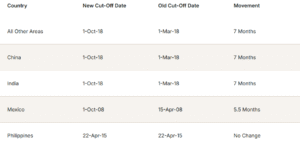
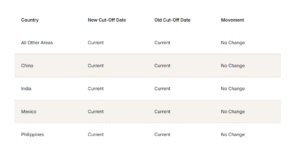
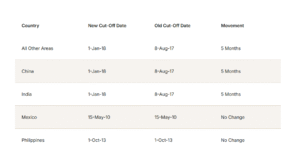
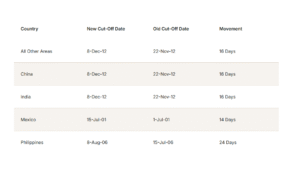
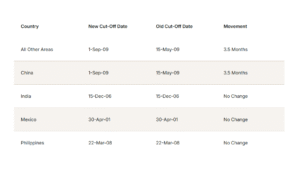
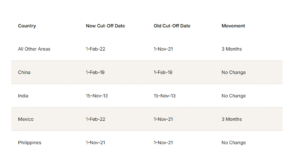
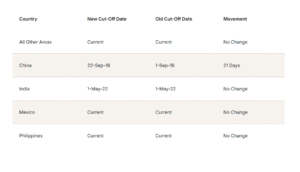
Family-based categories continued to move forward, led by another strong jump in F-1 (about 7 months). F-2B also advanced, while F-4 saw moderate gains. F-2A remained current across all countries. Other categories, including F-3, moved only slightly.
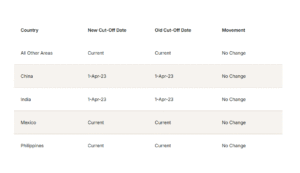
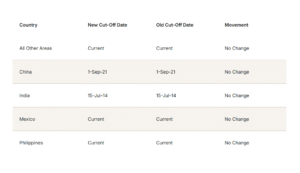
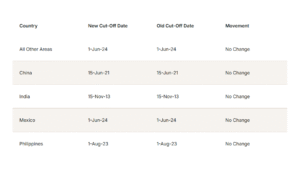
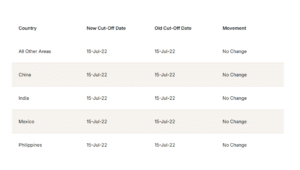
Employment-based categories were still mostly flat. EB-1, EB-2, and EB-3 saw no movement, but EB-3 Other Workers advanced modestly, and EB-5 China inched forward.
What is my priority date? This is usually the date your green card application petition was initially filed. Check your paperwork or consult with an immigration attorney if you’re unsure.
What if my country has a backlog? Some countries have longer wait times than others due to high demand. This means cut-off dates may move slower and sometimes even go backward (this is called retrogression).
How long will I have to wait? Unfortunately, the Visa Bulletin can’t give you an exact answer. The wait time depends on your category and country backlog. It’s helpful to track patterns in your category over multiple months to get a better sense.
If you’re already familiar with those terms, scroll down to our summary of key developments or to the filing category that’s most relevant to you:
Family-based categories
- F-1: Unmarried Children (Age 21 and Older) of U.S. Citizens
- F-2A: Spouses and Unmarried Children (Under Age 21) of U.S. Green Card Holders
- F-2B: Unmarried Children (Age 21 or Older) of U.S. Green Card Holders
- F-3: Married Children of U.S. Citizens
- F-4: Siblings of U.S. Citizens